BigAtWork / Blog / LinkedIn Influencer Marketing
LinkedIn Influencer Marketing | Complete 2026 Guide
How LinkedIn influencer marketing works for Indian brands, what it costs, and how to run and measure your first campaign.
LinkedIn influencer marketing is when a brand pays a LinkedIn creator, such as a founder, operator or industry specialist, to feature its product in their posts, newsletter or live sessions. For Indian brands that sell to professionals, LinkedIn influencer marketing reaches decision makers through people they already trust, instead of through ads they scroll past.
Vipul Chaudhary, founder of BigAtWork, wrote this guide. BigAtWork is a LinkedIn influencer marketing platform in India, and Vipul has run creator and influencer campaigns from the brand side. This guide covers how it works, what it costs, how to run a campaign and how to measure results.
What Is LinkedIn Influencer Marketing?
LinkedIn influencer marketing is a partnership between a brand and a LinkedIn creator whose audience matches the brand’s buyers. The creator writes about the product in their own voice, labels the post as a paid partnership, and publishes it to their followers.
The creators are rarely celebrities. They are a CFO who explains finance clearly, an HR head whose posts every recruiter reads, or a SaaS founder who shares what is working. Their influence comes from expertise, not fame.
The audience is the core difference from influencer marketing on Instagram or YouTube. On LinkedIn, the audience is at work, thinking about work problems, and often holds a budget. A single post from the right creator can reach the exact job titles a B2B brand is trying to sell to.
Why Does LinkedIn Influencer Marketing Work for B2B Brands?
Professionals ignore most ads, but they read the people they follow. Creator partnerships work because they borrow trust that a creator has already earned with a specific audience.
Four reasons it works:
- Trust transfers. A recommendation from a respected practitioner carries more weight than a brand’s own claims.
- Precise audiences. A creator who posts about payroll reaches HR leaders; one who posts about SaaS sales reaches founders and revenue teams.
- Content that lasts. A strong creator post keeps collecting comments and reposts for days, and you can boost it further as a Thought Leader Ad.
- Credibility for new categories. When buyers do not yet understand what you sell, a creator can explain it better than a landing page.
Creator partnerships suit SaaS, fintech, HR tech, AI and developer tools, edtech, and consumer brands with a professional angle, such as corporate gifting.
LinkedIn influencer marketing formats
Most campaigns use one or more of these four formats.
| Format | What it is | Best for |
|---|---|---|
| Sponsored post | The creator writes a post featuring your product, in their own voice | Awareness and trust |
| Thought Leader Ad | Your company page boosts the creator’s post to the job titles and companies you choose | Reaching named accounts |
| Newsletter feature | A mention or section in the creator’s LinkedIn newsletter | Deeper explanation and sign-ups |
| LinkedIn Live or event | The creator co-hosts a live session, webinar or launch with your team | Demos and launches |
A common pattern is to start with sponsored posts from three to five creators, see which posts land, and then boost the best ones as Thought Leader Ads. You can see how BigAtWork runs each format on the LinkedIn influencer marketing for brands page.
How Much Does LinkedIn Influencer Marketing Cost in India?
There is no fixed price list. Each creator sets a rate based on how many people see their posts, who those people are and how they engage.
A useful way to think about price is cost per 1,000 impressions. In the BigAtWork pricing model, a fintech creator whose posts average 8,000 impressions with a 3.5% engagement rate would charge roughly ₹3,500 to ₹5,000 for a sponsored post, and more for a Thought Leader Ad or a LinkedIn Live session. That is an estimate from our model, not a market average, and every creator sets their own final rate.
You can run your own numbers with the free LinkedIn influencer pricing calculator. It shows ranges for each format by niche, impressions and engagement.
A Worked Example: A Five-Creator Pilot
Here is how a first LinkedIn influencer marketing budget can look for an HR software brand that wants demo requests. These figures come from the BigAtWork pricing model and are estimates, not quotes.
| Item | Assumption | Estimated cost |
|---|---|---|
| Creators | 5 HR and SaaS creators | – |
| Reach per post | About 8,000 impressions each, 3% engagement | – |
| Sponsored posts | ₹3,000 to ₹4,500 per post | ₹15,000 to ₹22,500 |
| Boost the best 2 posts | Thought Leader Ads, budget you set in LinkedIn Campaign Manager | Your choice |
| Total reach | About 40,000 impressions before boosting | – |
At the midpoint, that is roughly ₹470 per 1,000 impressions, from people who chose to follow an HR expert. Compare that with your current cost per 1,000 impressions on LinkedIn ads, and judge both against the quality of comments and demo requests each brings.
Three things push the price up: a senior or hard-to-reach audience, high engagement from the right people, and formats that take more of the creator’s time. Follower count on its own is a weak guide.
How to Run a LinkedIn Influencer Marketing Campaign in 6 Steps
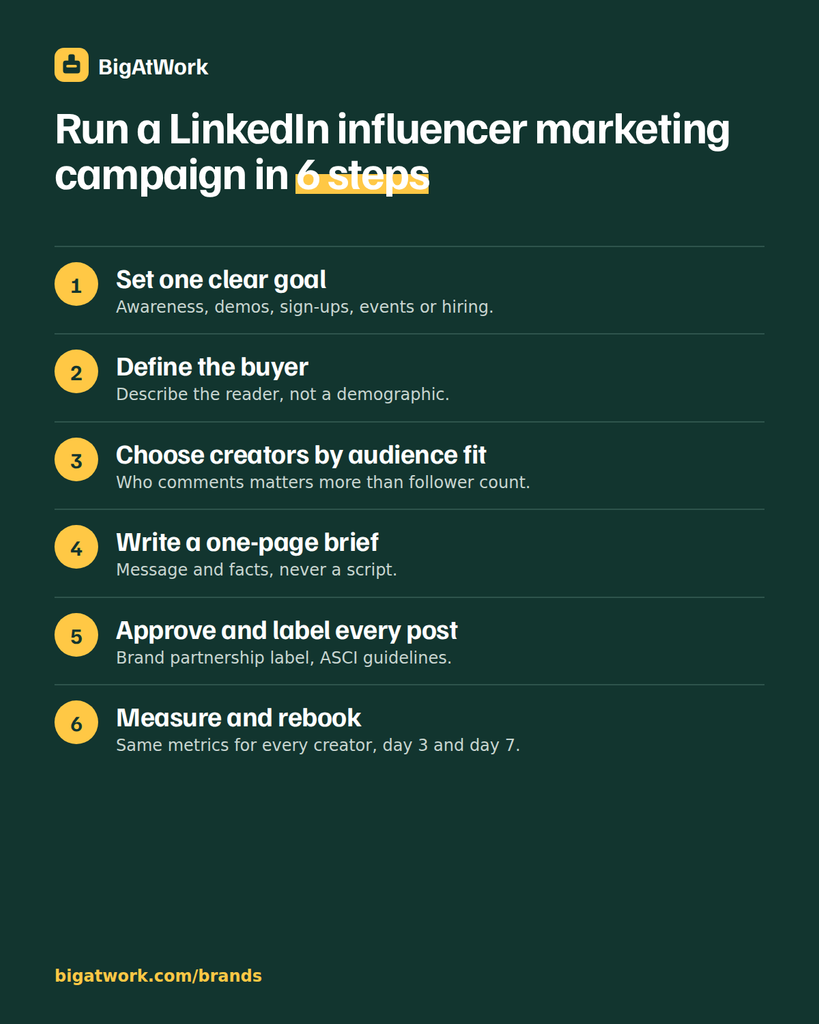
Every campaign follows the same six steps, whether you book one creator or twenty.
Step 1: Set one clear goal
Pick a single primary goal: awareness, demo requests, sign-ups, event registrations or hiring. Your goal decides which creators fit, which format to use and how you will measure results.
Step 2: Define the buyer you want to reach
Describe the reader, not a demographic. “HR leaders at Indian startups with 20 to 300 employees who still run payroll on spreadsheets” gives creators and your team far more to work with than “HR professionals”.
Step 3: Choose LinkedIn creators by audience fit
Look past follower count. Check who comments on a creator’s posts, whether they post consistently about one niche, and whether their engagement comes from real professionals rather than engagement pods. A smaller creator with the right audience usually beats a large generalist.
Step 4: Write a one-page brief
Share the goal, audience, one key message, must-include facts, things to avoid, dates and payment terms. Never send a script: creators write in their own voice, and that voice is what their audience trusts. Our free LinkedIn influencer campaign brief template gives you the ten sections with examples.
Step 5: Approve drafts and label every post
Review each draft once, focusing on accuracy rather than style. Every paid post should use LinkedIn’s brand partnership label and follow the ASCI guidelines for influencer advertising in India. Disclosure protects both your brand and the creator’s credibility.
Step 6: Measure and rebook what worked
Track each post from go-live to day seven, compare creators on the same metrics, and rebook the ones that delivered for your goal.
How Do You Measure LinkedIn Influencer Marketing?
Measure every creator the same way so you can compare them fairly.
- Impressions: how many times the post was seen.
- Engagement rate: reactions, comments and reposts divided by impressions.
- Effective cost per 1,000 impressions: what you paid divided by impressions, multiplied by 1,000.
- Audience fit: who engaged, by role and industry, compared with your target buyer.
- Clicks and outcomes: visits, demo bookings or sign-ups from a tracked link in the first comment.
Ask creators to share analytics screenshots on day three and day seven. Comments are often the most useful signal of all: a thread of questions from the right job titles tells you more than raw impressions.
What Is Different About LinkedIn Influencer Marketing in India?
India is one of LinkedIn’s largest markets, and LinkedIn influencer marketing here has a few features brands should plan for.
- Language. Many Indian creators write in English, Hindi or Hinglish. Let creators use the language their audience responds to rather than forcing polished corporate English.
- Niche over size. Some of the most useful Indian creators have 3,000 to 20,000 followers in a sharp niche, such as fintech for salaried professionals or hiring for early-stage startups.
- Disclosure rules. ASCI’s influencer guidelines apply to LinkedIn just as they do to Instagram, so every paid post needs a clear label.
- Payments and paperwork. Plan for INR payouts, agreements with each creator and GST-compliant invoicing. A platform that pays creators for you and sends one invoice saves your finance team real time.
- Founder-led audiences. Indian startup founders are active on LinkedIn, so B2B products for startups can reach buyers directly through founder creators.
If you are new to LinkedIn influencer marketing in India, a small pilot with three to five creators in one niche teaches you more than a large, spread-out campaign.
LinkedIn Influencer Marketing Vs LinkedIn Ads
LinkedIn ads let you target precisely, but they still look like ads. A creator partnership puts your message inside a post from a person your buyers already follow.
The two work best together. A creator writes the post, and your company boosts it as a Thought Leader Ad to reach the exact accounts you want. You get the creator’s credibility with the targeting of paid media.
Common LinkedIn Influencer Marketing Mistakes
Most creator campaigns that disappoint make one of these mistakes:
- Choosing by follower count. Large, general audiences rarely include your buyers.
- Sending a script. Posts that sound like ads lose the trust you paid for.
- Booking one creator once. One post is a test, not a campaign. Plan for several creators or repeat posts.
- Skipping disclosure. Undisclosed promotion damages trust and breaks ASCI rules.
- Measuring only likes. Comments from the right people and clicks to your site matter more.
How BigAtWork Runs LinkedIn Influencer Marketing for Brands
BigAtWork connects Indian brands with vetted LinkedIn creators and handles the whole campaign.
- Share a brief and get a matched shortlist of LinkedIn creators within 48 hours, with each creator’s audience, engagement and rate.
- Every creator is reviewed by a person before they can be booked.
- You approve every post before it goes live, and every post carries the brand partnership label.
- One GST invoice and one report for the whole campaign, with the same metrics for every creator.
Ready to start? Send your brief to BigAtWork, or read how a BigAtWork campaign works. If you are a creator, read our guide on how to become a LinkedIn influencer or browse more guides on the BigAtWork blog.
Follow BigAtWork for LinkedIn Influencer Marketing Insights
We share practical guides for brands and creators every week. Follow BigAtWork on LinkedIn, Subscribe on YouTube, and find us on X and Facebook.
What Is LinkedIn Influencer Marketing in Simple Words?
LinkedIn influencer marketing is when a brand pays a professional who posts on LinkedIn to talk about its product with their audience. The post is written in the creator’s own voice and clearly labelled as a paid partnership.
Is LinkedIn Influencer Marketing Worth It for B2B Brands?
Each creator sets their own rate, based mainly on impressions, audience seniority and engagement. You can estimate rates by niche with the free BigAtWork LinkedIn influencer pricing calculator.
How Do I Find LinkedIn Influencers for My Brand?
Search LinkedIn for people who post consistently about your category and check who engages with them. Or share a brief with BigAtWork and get a matched shortlist of vetted LinkedIn creators within 48 hours.
Do LinkedIn Sponsored Posts Need a Disclosure in India?
Yes. ASCI guidelines require paid collaborations to be clearly labelled. On LinkedIn, use the brand partnership label and a plain disclosure in the post.
What Is a Thought Leader ad on LinkedIn?
A Thought Leader Ad lets a company boost a post written by a person, such as a creator or employee, from its own ad account. It combines the creator’s voice with LinkedIn’s ad targeting.